5 Secrets to Propagate Roses with Carrots for a Thriving Garden
5 Secrets to Propagate Roses with Carrots for a Thriving Garden
- Introduction
- Understanding Rose Propagation
- Materials Needed
- Step-by-Step Process
- Mistakes to Avoid
- FAQ
- Conclusion
Introduction
Propagating roses can seem daunting, especially when you want to ensure the healthiest blooms for your garden. You may admire your neighbor’s lush roses and wonder how they achieve such beauty. Through a surprising method involving carrots, you can start your own successful rose propagation journey. Learning this unique approach offers not only a way to grow roses but also an opportunity to experiment with your gardening skills. Keep reading to discover how to embrace this innovative technique.
Understanding Rose Propagation
To successfully propagate roses using carrots, it’s essential to grasp the basics of rose propagation. This section will help you understand why this method works and what makes it so effective.
Benefits of Propagation
Propagation allows you to grow new roses from existing plants, ensuring that you can maintain your favorite varieties without the need to purchase new ones. Additionally, propagating is a sustainable way to expand your garden and share plants with friends.
How Carrots Play a Role
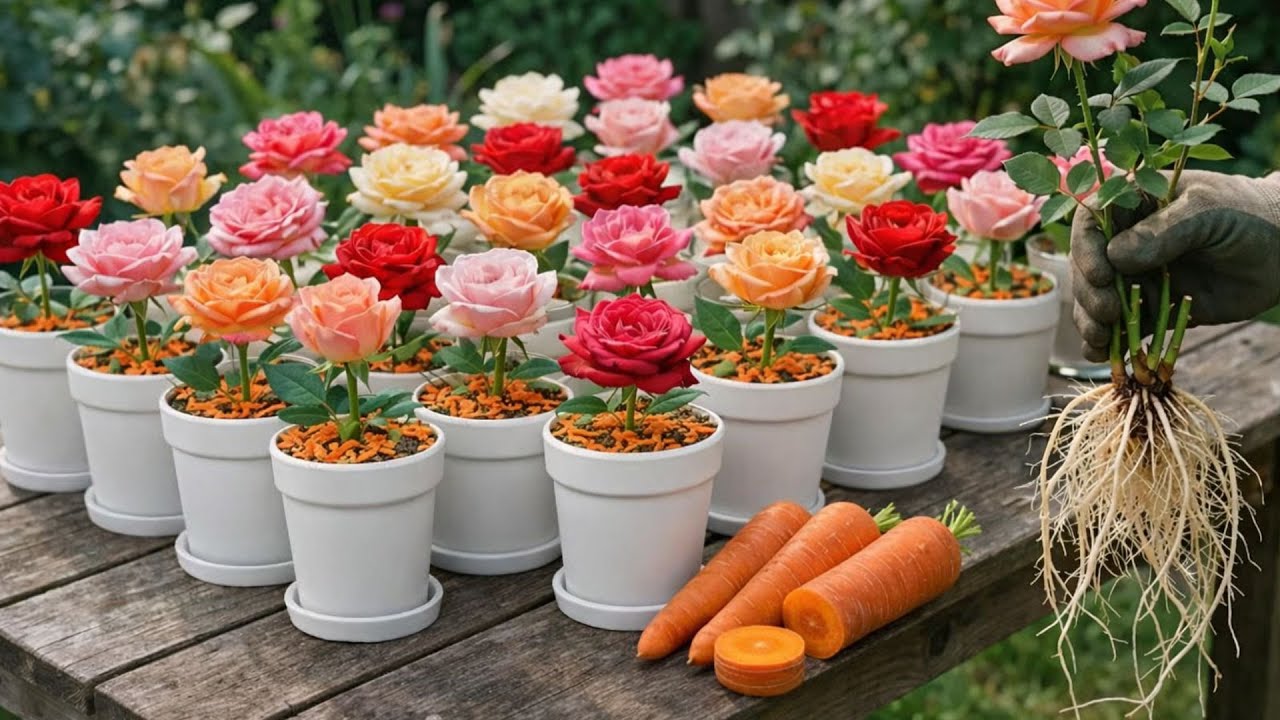
The use of carrots in rose propagation may seem unusual, but they provide essential nutrients that help stimulate root growth. The natural sugars in carrots act as a catalyst, promoting healthy development while giving your roses the best start possible.
Materials Needed
Before you begin, gather the necessary materials to ensure a smooth process. Having everything ready will allow you to focus on successful propagation.
- Healthy rose cuttings (6-8 inches long, ideally taken in spring or summer)
- Fresh carrots (unpeeled, for best results)
- Planting pots
- Well-draining potting soil
- Water
Step-by-Step Process
Now that you understand the theory behind using carrots for rose propagation, let’s dive into the practical steps to get started.
1. Cut and Prepare the Rose Cuttings
- Take the cuttings from healthy rose plants. Select stems that are firm and healthy.
- Remove excess leaves to minimize moisture loss and stress on the cutting.
- Dip the cut end in rooting hormone to encourage root growth.
2. Prepare Carrots
- Wash the carrots thoroughly to remove any dirt. Do not peel them.
- Cut the carrots into sections about 3-4 inches long. These will serve as the base for your cuttings.
3. Plant the Cuttings
- Fill each planting pot with well-draining potting soil.
- Insert the carrot section into the soil, leaving part of it exposed.
- Place the rose cutting into the carrot section and ensure it makes contact with the carrot for best results.
4. Water and Care
- Water the soil lightly to provide moisture without waterlogging.
- Place the pots in indirect sunlight and ensure room temperature is maintained.
- Keep the soil moist but not soggy for optimal growth.
Mistakes to Avoid
As you embark on propagating roses with carrots, consider these common pitfalls to enhance your chances of success.
- Using old cuttings: Fresh, healthy cuttings are crucial for successful propagation.
- Overwatering: Too much water can rot the cuttings. Keep the soil moist but not saturated.
- Neglecting light conditions: Ensure your cuttings receive adequate but not direct sunlight.
- Skipping rooting hormone: This can significantly improve the chances of successful rooting.
FAQ
Can I propagate any type of rose with carrots?
Yes, most types of roses can be propagated using this method, especially hybrid roses.
How long does it take for roses to root?
Typically, rose cuttings can take 2-8 weeks to root, depending on the variety and environmental conditions.
What if my cuttings don’t take root?
If your cuttings fail to root, review your process and check for any mistakes made regarding the cuttings’ freshness or moisture levels.
Conclusion
By understanding the simple yet effective steps to propagate roses with carrots, you can create a thriving garden filled with beautiful blooms. With some careful attention and patience, your roses will flourish. What varieties are you considering adding to your garden this year?