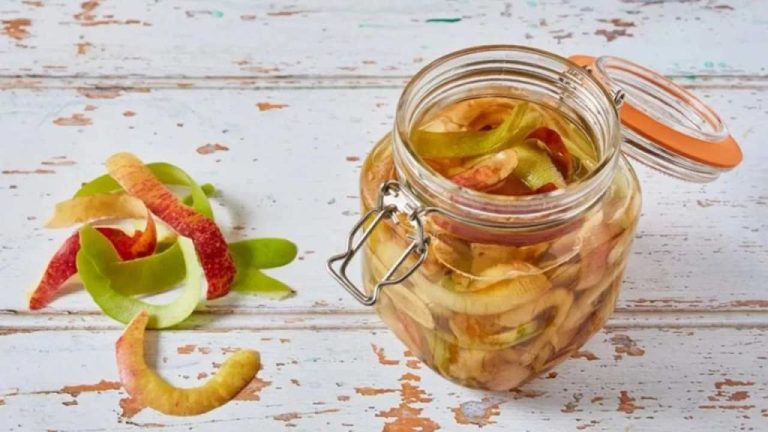
Apple Peels in Water: You Won’t Believe What Happens Next!
Apple Peels in Water: You Won’t Believe What Happens Next!
In this article, we will explore the astonishing uses of apple peels and other scraps. Discover what you can create by immersing these items in a jar of water.
The Benefits of Apples
Apples are one of the most common fruits found on Italian tables. The famous saying, “An apple a day keeps the doctor away,” is not just a cliché; it truly reflects the incredible benefits of regularly consuming this fruit.
Rich in fiber and vitamins, apples help keep our bodies well-hydrated, mainly due to their high water content. Additionally, they contain antioxidants and numerous essential minerals.
Eating apples also offers real benefits for our digestive health. Therefore, incorporating apples into our diet is crucial, much like other fruits.
What to Do with Apple Peels
When you prepare to enjoy an apple, you’ll need to remove the outer skin. However, you can also eat the apple with its skin if carefully washed, as it contains several vitamins, including vitamin K. But not everyone prefers the skin.
If you decide to peel your apple before eating, don’t throw away the peels! In fact, they can be used to create a widely utilized ingredient in the kitchen and beyond. What are we talking about? Let’s dive into it.
Create Apple Cider Vinegar from Apple Peels
Apple cider vinegar is a popular ingredient in cooking, much like wine vinegar or white vinegar. It’s cherished for enhancing various recipes and effectively cleansing specific surfaces.
In culinary applications, apple cider vinegar is primarily used as a flavorful condiment for many vegetable salads. Depending on individual tastes, it can be used as an alternative to balsamic vinegar in this role.
Moreover, a variety of savory and sweet recipes can be made with apple cider vinegar. For example, it pairs wonderfully with cake recipes and is useful in leavening many desserts. You can even use it in homemade mayonnaise!
As expected, apple cider vinegar also serves a purpose in household cleaning. It possesses remarkable disinfecting and degreasing properties, making it highly effective for sanitizing numerous surfaces.
Additionally, apple cider vinegar effectively eliminates unpleasant odors from electric ovens and microwaves. Simply dissolve it in water and wipe down the surfaces with a sponge or cloth.
How to Make Homemade Apple Cider Vinegar
Making apple cider vinegar is straightforward and accessible to everyone. You can utilize not only apple scraps but also all the waste parts, such as peels and cores. Ready to discover how to create perfect apple cider vinegar? Here’s what you need to know.
Ingredients and Preparation Steps
1. Start with a few apples and cut them into medium to small pieces. Place these pieces in a jar along with the peels and cores.
2. Fill the jar with water until it’s full, ensuring that the apple bits and scraps fill about half of the jar.
3. Next, add sugar. The recommended ratio is one heaping tablespoon of sugar for every 250 milliliters of water. Stir everything well to dissolve the sugar.
4. Cover the jar with a piece of cloth or cotton to prevent insects or fruit flies from entering. Keep the mixture in a cool, dark place for about 15 days, stirring at least once daily.
5. As the days pass, the liquid will darken due to the natural fermentation process. After 15 days, strain the liquid, separating it from the apple pieces and scraps.
6. To complete the fermentation process, transfer the strained liquid to another jar and let it sit for about a month and a half.
Conclusion
By simply using apple peels and scraps, you can create a versatile ingredient like apple cider vinegar, useful in both cooking and household cleaning. So, next time you enjoy an apple, remember to make the most of every part of this wonderful fruit!