
7 Secrets to Successfully Propagate Rose Cuttings and Grow Beautiful Blooms Fast
7 Secrets to Successfully Propagate Rose Cuttings
- Understanding Rose Propagation
- Materials Needed
- Step-by-Step Guide to Propagation
- Common Mistakes to Avoid
- FAQ
Have you ever admired the beauty of rose bushes in a garden and wished you could recreate that splendor in your own home? Successfully propagating rose cuttings can feel daunting, yet the rewards of nurturing these stunning blooms are well worth the effort. With the right knowledge and care, you can cultivate roses that thrive and bring joy to your space. Read on to discover essential tips for successful propagation.
Understanding Rose Propagation
Before diving into the practical steps, it’s important to grasp what propagation truly entails. Rose propagation involves taking cuttings from a healthy rose plant and encouraging them to develop roots and grow into new plants. This method allows you to reproduce the specific variety you love, ensuring the new plants maintain the same characteristics as the parent. Here are some advantages:
- Cost-effective way to expand your garden.
- Preserves the genetic traits of your favorite roses.
- Allows for experimentation with different varieties.
Materials Needed
Having the right tools at hand can significantly increase your chances of success when propagating rose cuttings. Here’s a list of materials you will need:
- Healthy rose cuttings: Look for semi-hardwood stems, ideally new growth from the current season.
- Sharp cutting tool: A clean, sharp knife or garden shears will ensure clean cuts.
- Rooting hormone: Available at gardening stores, this helps stimulate root growth.
- Growing medium: Use a mix of potting soil and sand for excellent drainage.
- Containers: Small pots or trays to hold your cuttings.
Step-by-Step Guide to Propagation
Now that you have your materials ready, follow these steps for successful propagation:
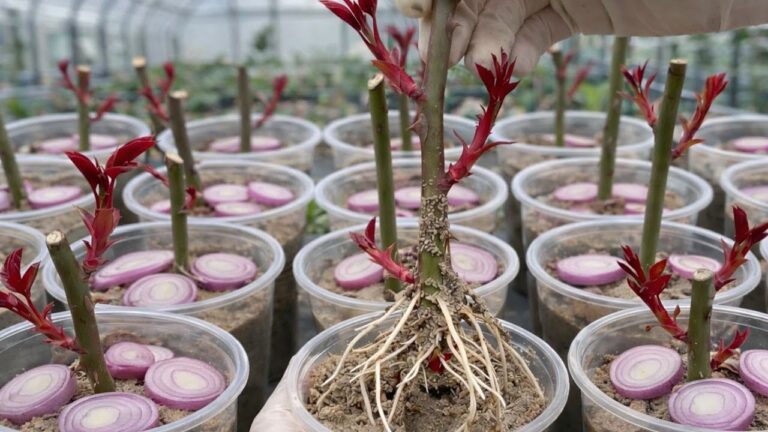
- Prepare the cuttings: Take cuttings that are 6 to 8 inches long, ensuring each has at least two nodes. Cut just below a node to maximize healing and rooting potential.
- Apply rooting hormone: Dip the cut end of each cutting into rooting hormone. This step enhances the chances of root development.
- Plant the cuttings: Place the cuttings into your prepared growing medium, burying them about halfway. Make sure they’re spaced apart to allow for air circulation.
- Water gently: Moisten the soil carefully after planting, ensuring it’s damp but not soaked.
- Create a mini greenhouse: Cover the containers with plastic wraps or place them in a humidity dome to maintain moisture levels.
- Provide sunlight: Position your pots in bright, indirect sunlight. Direct sunlight can scorch the cuttings.
- Monitor and wait: Keep the soil moist and check for root development after a few weeks. Gently tug on a cutting; if you feel resistance, roots have started to form.
With patience and care, you’ll see your cuttings develop roots and eventually sprout new leaves, bringing you closer to stunning blooms.
Common Mistakes to Avoid
When propagating rose cuttings, avoiding common pitfalls can significantly enhance your success rate. Here are a few mistakes to steer clear of:
- Using overly woody or old cuttings, which will struggle to root.
- Overwatering the cuttings, leading to rot instead of healthy root development.
- Neglecting to use sterilized tools can introduce disease into your cuttings.
- Forgetting to check humidity levels, which can lead to dehydration.
- Placing cuttings in direct sunlight, resulting in scorched leaves and stunted growth.
FAQ
How long does it take for rose cuttings to root?
Generally, it takes about 4 to 6 weeks for rose cuttings to develop roots, but this can vary based on conditions and variety.
Can I propagate roses in water?
Yes, some people successfully propagate rose cuttings in water; however, planting them in soil often yields better results.
What conditions are best for rooting rose cuttings?
Keep your cuttings in a warm environment with indirect sunlight and maintain consistent moisture levels for the best chance of success.
Propagating rose cuttings is a rewarding endeavor that enables you to cultivate beautiful blooms right in your home. By following essential guidelines and avoiding common mistakes, you increase your chances of success. What types of roses are you considering propagating? Share your thoughts in the comments below!