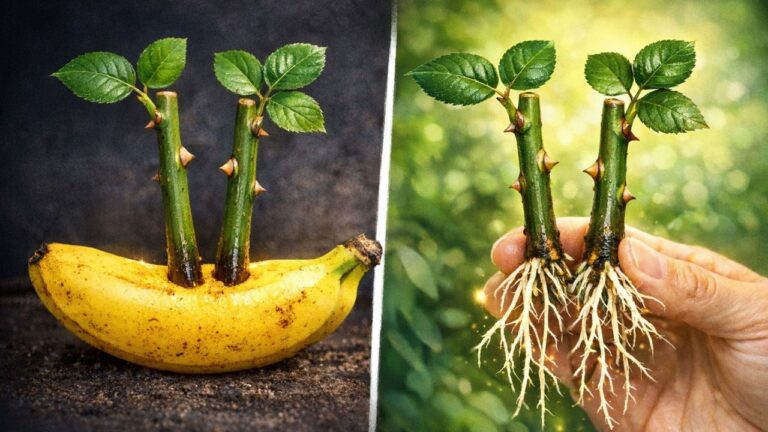
Grow 10+ Roots from Rose Cuttings in Just 1 Spoon of This Secret Ingredient! 🌹
Quick Guide to Growing Roots from Rose Cuttings
- Introduction
- Required Materials
- Preparation Steps
- Care for Your Cuttings
- Common Mistakes to Avoid
- FAQ
- Conclusion
Introduction
Have you ever found yourself gazing longingly at a beautiful rose bush, wondering how you could replicate its beauty in your own garden? Growing roses from cuttings can seem like a daunting task, yet it’s more accessible than many believe. While there’s much to consider—like choosing the right cuttings and ensuring optimal conditions—the process can be rewarding and even enjoyable. Discover the simple steps to take your rose gardening to the next level.
Required Materials
Before diving into the rooting process, gather the following items to set yourself up for success:
- Pruning shears: Sharp and clean for cutting your rose stems.
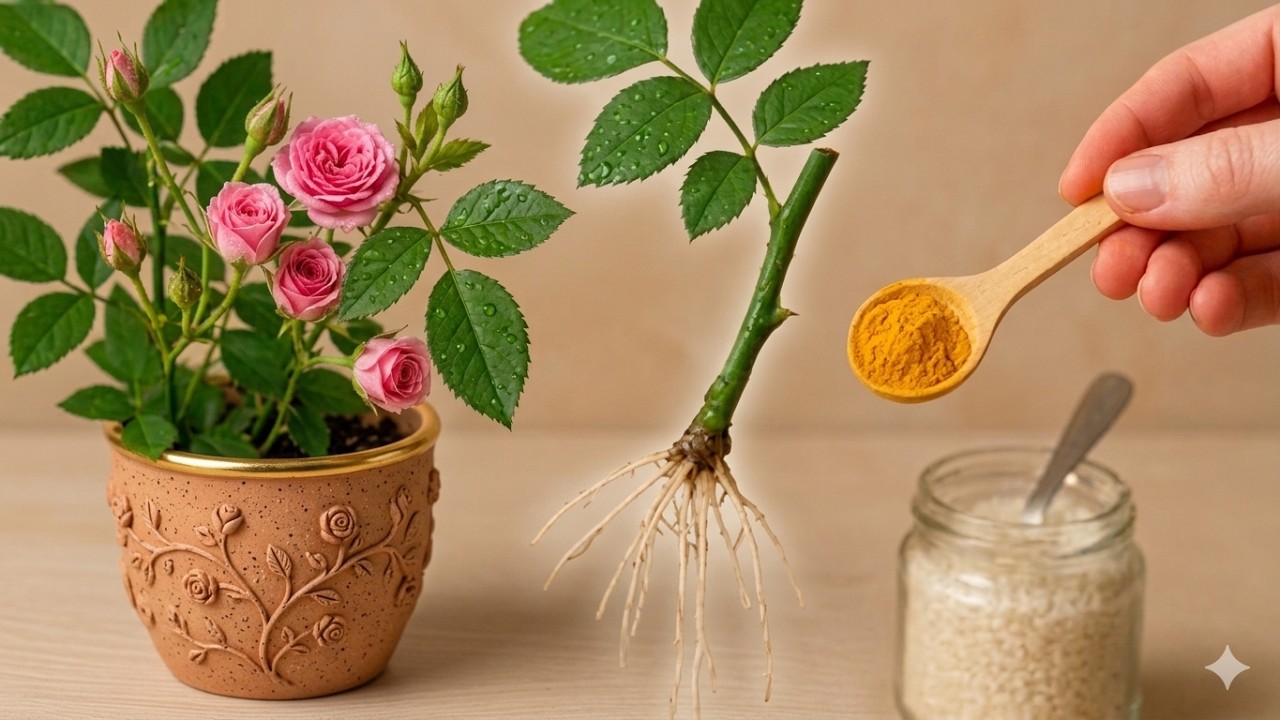
- Rooting hormone: This secret ingredient can boost root development. Look for powder or gel forms.
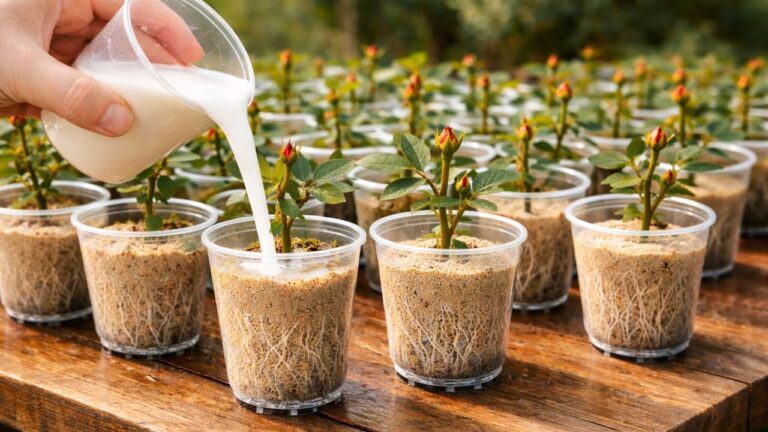
- Planting pots: Small pots or containers filled with potting soil, well-draining mix, or even perlite.
- Plastic wrap or plastic bag: To create a humid environment for your cuttings.
- Water: This is essential for keeping the cuttings hydrated.
Preparation Steps
Preparation is key to successfully growing roots from rose cuttings. Follow these steps carefully:
Choosing and Cutting the Stems
- Select healthy stems: Look for stems that are firm and semi-hardwood, preferably from the current year’s growth.
- Cut the stems: Use your pruning shears to cut 6 to 8 inches of stem just below a leaf node.
- Remove excess leaves: Trim away the lower leaves, leaving only a couple at the top.
Applying Rooting Hormone
Using a rooting hormone can significantly improve your success rate:
- Dip the cut end of each rose stem into water.
- Then, immerse it in rooting hormone, ensuring the cut end is well-coated.
Planting the Cuttings
Now it’s time to plant your cuttings:
- Insert the cuttings into your prepared pots.
- Water thoroughly, ensuring the soil is moist but not soggy.
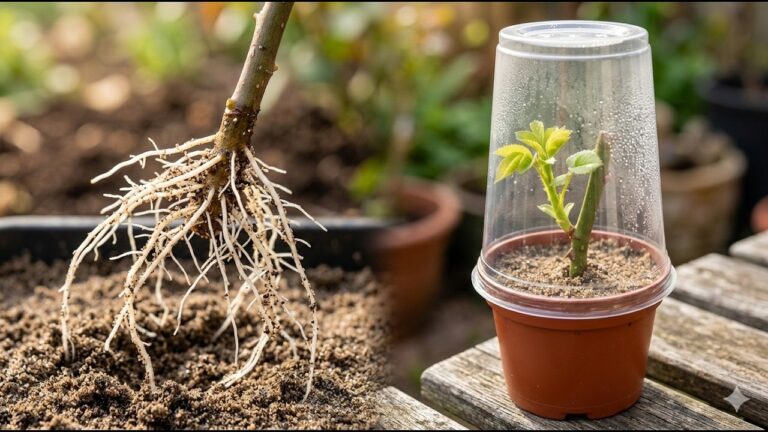
- Cover with plastic wrap or a bag to create humidity around the cuttings.
Care for Your Cuttings
Proper care is vital during the rooting phase. Here’s how you can nurture them:
Maintaining Humidity
Humidity plays a significant role in root development:
- Check the moisture level regularly.
- Remove the covering for a few hours daily to prevent mold buildup.
Choosing the Right Location
Light and warmth help stimulate growth:
- Place your pots in a warm area with indirect sunlight.
- A windowsill often provides the ideal environment.
Watering Tips
Proper watering will ensure your cuttings thrive:
- Water only when the top inch of soil feels dry.
- Be cautious not to overwater, as this can cause rot.
Common Mistakes to Avoid
Even seasoned gardeners can make mistakes. Here are common pitfalls to be aware of:
- Using too much rooting hormone: While beneficial, too much can harm the plant.
- Overwatering: Ensure that the soil remains moist but not waterlogged.
- Neglecting humidity: Without adequate humidity, cuttings can dry out and fail to root.
- Ignoring surrounding temperatures: Cuttings need warmth, so avoid placing them in cold drafts.
- Skipping the acclimation: Gradually introduce your new plants to outdoor conditions once they root.
FAQ
How long does it take for rose cuttings to root?
Typically, rose cuttings can take 4 to 6 weeks to begin developing roots, depending on the conditions.
Can I use any part of the rose stem for cuttings?
It’s best to use healthy stems that are semi-hardwood and around 6 to 8 inches long for the best results.
Do I need special soil for rooting rose cuttings?
A well-draining potting mix or perlite works best to support the rooting process while preventing soggy conditions.
Conclusion
By following the steps in this guide, you can cultivate new rose plants from cuttings with relative ease. Remember to nurture your cuttings and watch them thrive. What rose varieties are you excited to try growing from cuttings? Share your thoughts in the comments!