Revive Your Garden: 5 Easy Steps for 100% Natural Rose Cuttings!
Revive Your Garden: 5 Easy Steps for 100% Natural Rose Cuttings
- Introduction
- Natural Materials for Rose Cuttings
- Step-by-Step Guide to Taking Cuttings
- Proper Care for Your Rose Cuttings
- Common Mistakes to Avoid
- FAQ
- Conclusion
Introduction
Have you ever felt disheartened seeing your garden’s vibrant roses starting to fade? Maybe the other plants around seem to be thriving while your beloved blooms are suffering. This situation is more common than you think, and many gardeners feel the same way. Fortunately, you don’t have to give up on your roses. Learning to take natural rose cuttings can breathe new life into your garden and help you cultivate beautiful blooms once more. Let’s explore how you can revive your garden by following a few straightforward steps.
Natural Materials for Rose Cuttings
Using the right materials is essential for successful rose cuttings. Here’s what you will need:
- Healthy Rose Stems: Select stems that are at least 6 inches long, preferably from healthy plants.
- Clean Scissors or Pruners: Ensure your tools are sterilized for preventing disease.
- Potting Mix: Use a well-draining potting mix or:
- 1 part compost
- 1 part perlite or sand
Choosing the Right Rose Variety
Not all roses are equally easy to propagate. Look for varieties that are known for being hardy and resilient, such as Hybrid Tea or Floribunda roses. These tend to root more easily, giving you a better chance of success.
Step-by-Step Guide to Taking Cuttings
Taking cuttings for propagation can seem daunting at first, but by following these steps, you’ll find it’s quite manageable:
- Choose the Right Time: Late spring to early summer is the optimal time for taking cuttings, as roses are actively growing.
- Prepare Your Cuttings: Cut a healthy stem about 6-8 inches long, ensuring you make the cut just below a leaf node.
- Remove Lower Leaves: Strip off the leaves from the lower half of the cutting, leaving only a couple near the top. This reduces water loss.
- Dip in Rooting Hormone: Although optional, this promotes faster rooting. Dip the cut end in rooting hormone if you choose to use it.
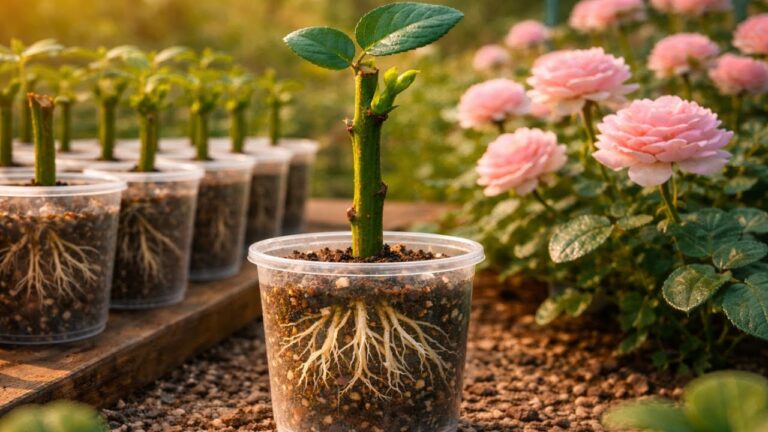
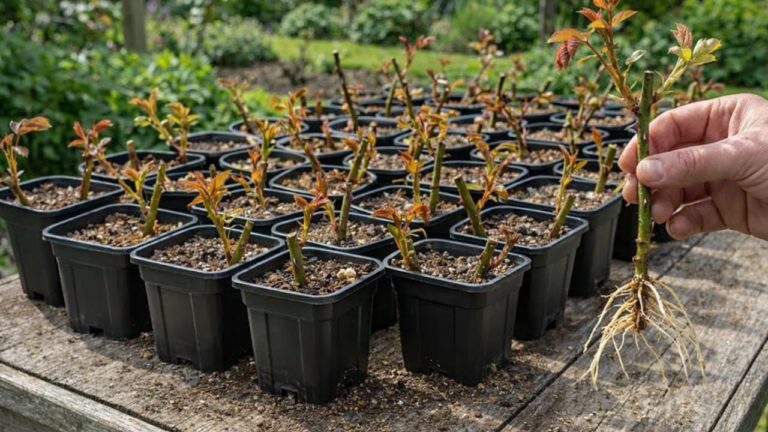
- Plant the Cuttings: Insert the cutting into your prepared potting mix, ensuring it’s deep enough to stay upright.
Creating a Humid Environment
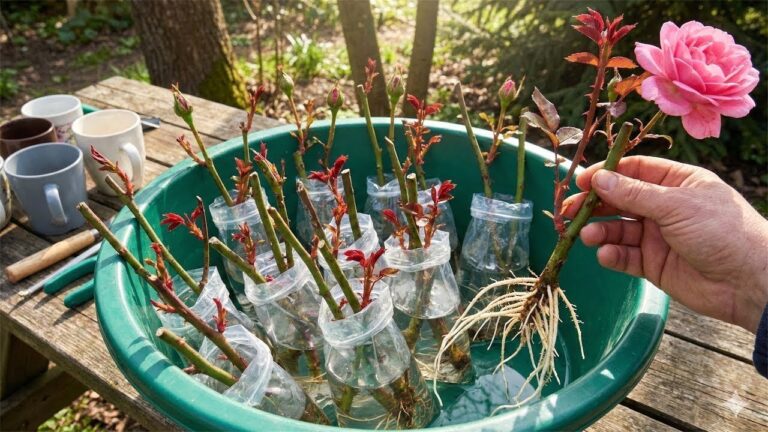
To encourage rooting, create a small greenhouse effect. You can do this by covering your pot with a plastic bag or a clear plastic container. This retains moisture and warmth.
Proper Care for Your Rose Cuttings
Once you’ve planted your cuttings, taking care of them is crucial. Here’s how:
- Watering: Keep the soil moist but not soggy. Water lightly every few days.
- Bright, Indirect Light: Position the cuttings in a location with plenty of indirect sunlight. Direct light can be too harsh.
- Check for Roots: After a few weeks, gently tug on the cuttings. If you feel resistance, they are likely developing roots.
Transplanting Your New Roses
After 6-8 weeks, once your cuttings have established roots, you can transplant them into larger pots or outdoors. Choose a location with rich, well-draining soil and sufficient sunlight for the best results.
Common Mistakes to Avoid
Learning from others’ experiences can save you some frustration. Here are a few common pitfalls:
- Using Old or Weak Stems: Always choose healthy, vigorous stems for cuttings.
- Overwatering Cuttings: Too much water can lead to root rot. Be sure the potting mix drains well.
- Ignoring Sunlight Needs: Make sure your cuttings receive enough indirect light without being scorched by the sun.
- Not Checking for Roots: Waiting too long to check for root development may mean losing your cuttings.
- Skipping on Fertilizer: Once rooted, using a diluted fertilizer can help boost growth.
FAQ
How long does it take for rose cuttings to root?
Rose cuttings typically take 4-8 weeks to develop roots, depending on the variety and environmental conditions.
What is the best time of year to take rose cuttings?
The best time for taking rose cuttings is late spring to early summer when roses are in their active growth phase.
Can I use tap water for rooting rose cuttings?
It’s best to use distilled or rainwater, as tap water may contain chemicals that can inhibit rooting.
Conclusion
Taking natural rose cuttings is a rewarding way to breathe new life into your garden by cultivating beautiful blooms from existing plants. By following the right steps and avoiding common pitfalls, you can successfully propagate roses with confidence. Which rose variety are you excited to try propagating next? Share your thoughts in the comments!