
Grow 1001 Roots from Rose Cuttings in Just 1 Night with This Simple Lemon Trick!
Grow Roots from Rose Cuttings: A Simple Lemon Trick
Introduction
Have you ever felt the urge to propagate your beautiful rose plants but found the traditional methods too lengthy and complex? With so many tips circulating, it can be overwhelming to know where to start. What if there was a simple approach that not only simplified the process but also boosted your success rate? Discover how you can root rose cuttings with the surprisingly effective method of using lemon juice, and get ready to transform your gardening experience.
Benefits of the Lemon Trick
Utilizing lemon juice in your propagation process offers several advantages that can significantly enhance your success. Here are some compelling reasons to adopt this method:
- Boosts growth: The natural citric acid in lemon juice encourages quicker root development.
- Minimizes rot: Lemon juice has antibacterial properties that help prevent fungal infections in cuttings.
- Adds nutrients: Lemon contains micronutrients that promote healthier growth in young plants.
How Lemon Juice Affects Rooting
Lemon juice can create an optimal environment for your rose cuttings to thrive. The acidity not only stimulates root production but also balances the soil’s pH, making it more favorable for development.
Ideal Types of Roses for Propagation
While many roses can be propagated using this method, some varieties are particularly well-suited. Look for:
- Hybrid Tea Roses
- Floribunda Roses
- Climbing Roses
Step-by-Step Preparation
Follow these simple steps to successfully grow roots from your rose cuttings using lemon juice:
- Gather materials: You’ll need fresh rose cuttings, a sharp knife, lemon juice, soil, and pots.
- Prepare the cuttings: Cut 6-8 inch sections from healthy stems, ensuring each has several leaves.
- Apply lemon juice: Dip the cut ends into lemon juice for a few seconds to absorb the nutrients.
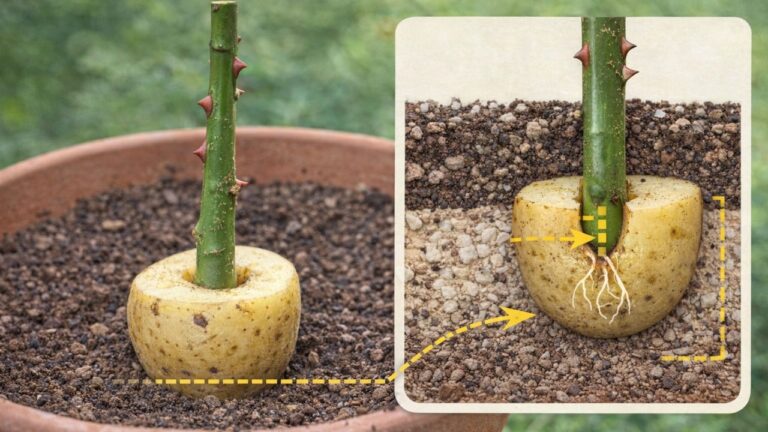
- Plant in soil: Insert the treated cuttings into the soil, ensuring that at least one leaf node is buried.
- Water thoroughly: Water the cuttings gently to settle the soil around them.
- Cover for humidity: Place a plastic bag or clear container over the pot to maintain humidity.
Optimal Conditions for Growth
For best results, place your potted cuttings in a warm, bright location, but avoid direct sunlight. This environment will encourage growth without risking damage from excessive heat.
Monitor and Care
Keep an eye on the moisture level; the soil should be damp but not soggy. After a few weeks, gently tug at the cuttings to check for resistance, indicating root growth.
Common Mistakes to Avoid
Even with the best intentions, it’s easy to make mistakes when propagating rose cuttings. Here are a few common pitfalls:
- Using old cuttings: Make sure to use fresh, healthy stems for the best chance of rooting.
- Too much water: Overwatering can lead to rot; maintain a delicate balance.
- Ignoring light conditions: Be cautious about placing cuttings in direct sunlight too soon.
- Using unsterilized tools: Always use clean, sharp tools to prevent infections.
FAQ
How long does it take for rose cuttings to root?
Typically, rose cuttings can take anywhere from a few weeks to a couple of months to develop roots, depending on the conditions provided.
Can I use lemon juice from concentrate?
While fresh lemon juice is best, using juice from concentrate can still provide some benefits. However, freshness typically yields better results.
What is the best time to take rose cuttings?
The ideal time for taking rose cuttings is during late spring or early summer when the plants are actively growing.
Conclusion
Patience and care are key when using lemon juice to grow roots from your rose cuttings. By following these steps and avoiding common mistakes, you can enhance your gardening skills and expand your rose collection. Have you ever tried propagating roses? Share your experiences in the comments!