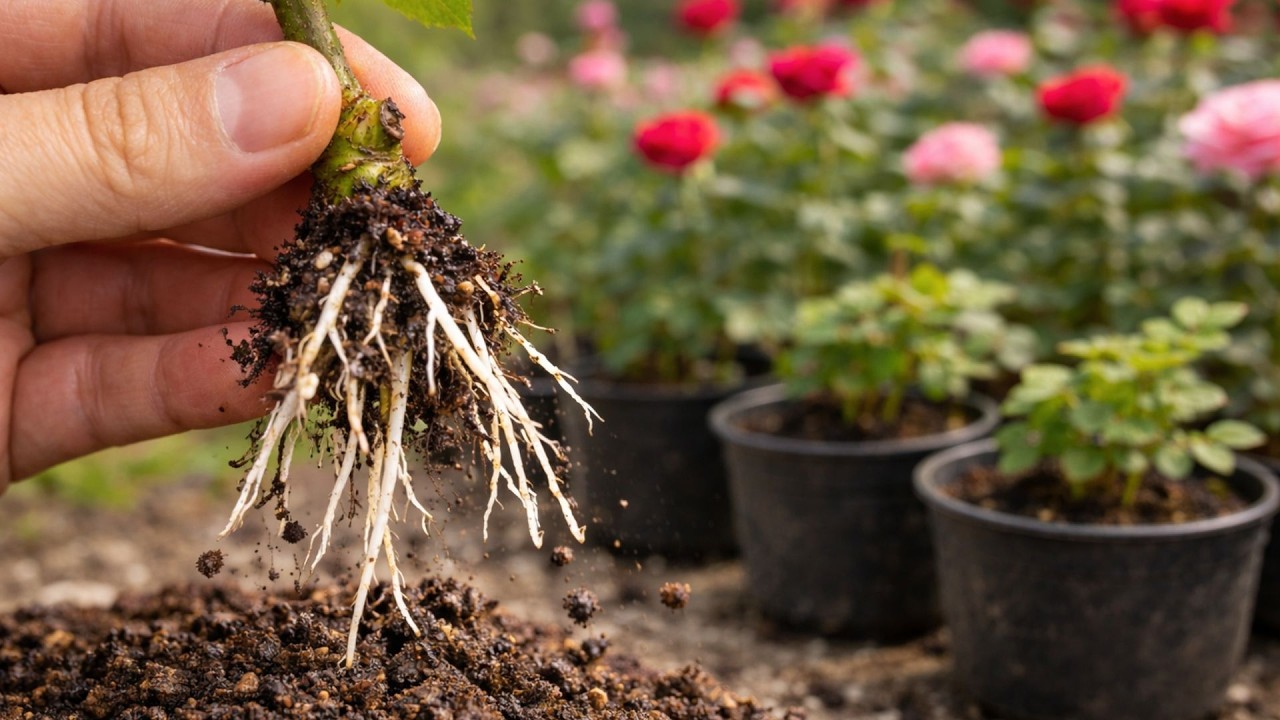
Multiply Your Rose Plants in Just 7 Days with This Simple Trick! 🌹
Multiply Your Rose Plants in Just 7 Days with This Simple Trick
- Introduction
- Understanding Rose Propagation
- Materials Needed
- Step-by-Step Process
- Common Mistakes
- FAQ
- Conclusion
Introduction
Have you ever admired the lush blooms of rose plants in your garden and wished you could grow more without spending a fortune? Perhaps you have a beautiful variety that you simply can’t resist multiplying. Whatever your reason, propagating roses can be a fulfilling project that not only enhances your garden but also connects you with nature. The process may seem daunting, but with the right approach, you can cultivate new plants successfully. Read on to discover how you can start your journey of rose propagation today!
Understanding Rose Propagation
Before diving into the practical steps, it’s essential to grasp rose propagation and how it works. This can help make your efforts more effective.
What is Rose Propagation?
Rose propagation involves creating new rose plants from existing ones, primarily through cuttings. Understanding the biology of the plant can help you choose the best methods and timing for propagation.
Why Propagate Roses?
- You can preserve and share favorite varieties.
- It’s a cost-effective way to expand your garden.
- You gain the satisfaction of growing your own plants.
Materials Needed
Gathering the right materials is crucial for a successful propagation process. Here’s what you will need:
- Healthy rose cuttings: Choose stems that are at least 6 inches long.
- Potting soil: A well-draining mix is essential for root development.
- Containers: Use pots or seed trays to hold your cuttings.
- Rooting hormone: This can help stimulate root growth.
- Plastic bag or humidity dome: To maintain moisture during the rooting process.
Step-by-Step Process
Now that you have all your materials, let’s delve into the step-by-step process of propagating your roses.
1. Prepare Your Cuttings
- Take cuttings from the desired rose plant in the morning to ensure they are turgid.
- Use a sharp, clean tool to cut stems approximately 6 inches long, just below a leaf node.
- Remove the lower leaves, leaving only the top few leaflets.
2. Apply Rooting Hormone
Dip the cut end of each stem into rooting hormone to encourage faster root development.
3. Plant Your Cuttings
- Fill your containers with potting soil, making sure it’s moistened but not soggy.
- Make small holes in the soil for your cuttings, place them in, and gently pack the soil around them.
- Water again lightly to help settle the soil around the cuttings.
4. Create a Humid Environment
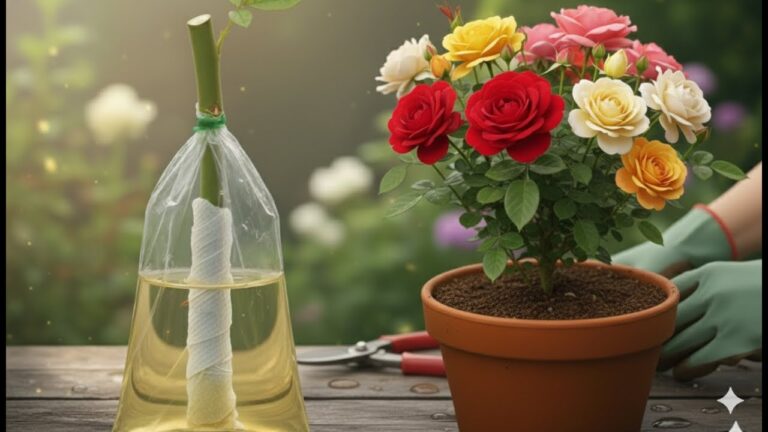
Cover the containers with a plastic bag or humidity dome to maintain a warm and moist environment. Make sure to ventilate occasionally to prevent mold.
5. Monitor and Wait
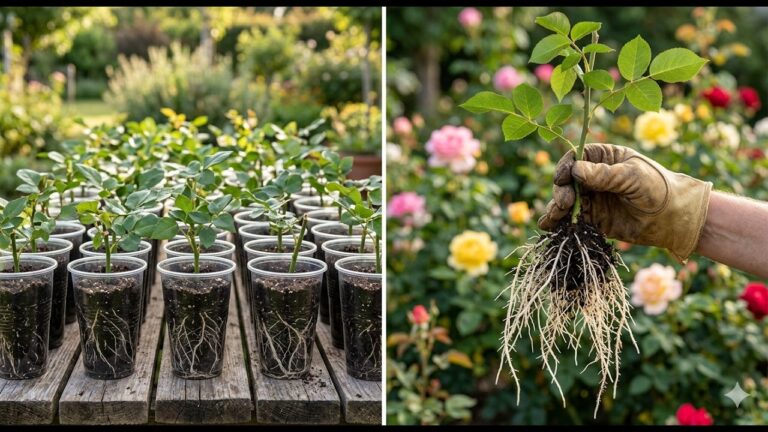
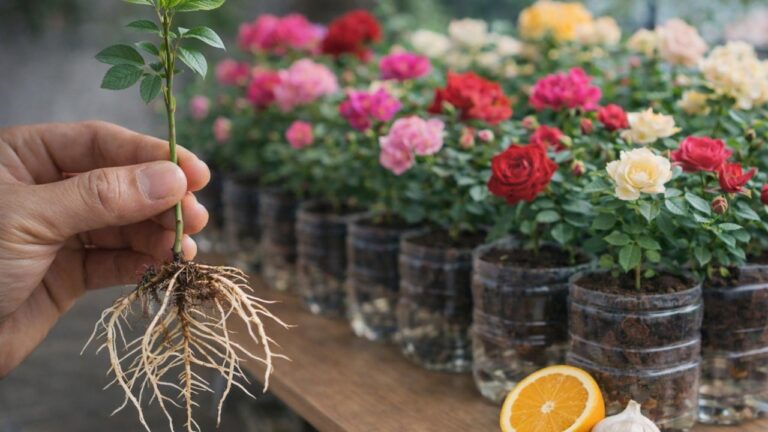
Keep the soil moist but not waterlogged, and place the containers in a bright, indirect light location. In about 7 days, your cuttings should develop roots.
Common Mistakes
To ensure your success in rose propagation, be mindful of these common mistakes:
- Ignoring plant health: Always choose healthy cuttings; diseased ones can lead to failure.
- Overwatering: Soggy soil can cause your cuttings to rot.
- Insufficient light: Lack of adequate light can hinder root development.
- Not using a rooting hormone: This may slow down the rooting process significantly.
- Neglecting to provide humidity: Too dry an environment can lead to wilting.
FAQ
What types of roses can I propagate?
You can propagate most types of roses, including hybrid tea, climbing, and shrub varieties, using the same methods discussed.
How can I tell if my cuttings have rooted?
Gently tug on the cuttings after about 7 to 10 days; if you feel resistance, roots have likely formed.
When is the best time to propagate roses?
Late spring or early summer is ideal, as the weather encourages strong growth.
Conclusion
Propagating rose plants is a rewarding endeavor that can bring vibrant blooms to your garden. By following these steps and avoiding common pitfalls, you’ll be well on your way to expanding your collection. Have you tried propagating roses before? Share your experiences in the comments below!